Reckoning with Ourselves
What follows is my sermon from Yom Kippur evening.
Let me begin with a statement of faith. It is the most profound of Jewish teachings. It is this. We can change. We can do better. I recognize this is not always how things appear. This is not what current discourse suggests. Once a cheat, always a cheat. Once a sinner, always a sinner. Once a thief, always a thief. Commit one wrong, however large or small, and it will follow you the rest of your life. That is not Judaism’s perspective. There is always the potential for repair.
These High Holidays are a reaffirmation of this belief. We affirm that human beings have a remarkable potential for good. We acknowledge our mistakes together. We do not single one person out over another. We recount our wrongs in community. Why? So that we can do better. That in a nutshell is what all these hours of praying and fasting, of standing up and sitting down, of singing and beating our chests are all about. We can change. We can turn. We can devote ourselves to repentance. We can do better.
Rabbi Harold Schulweis z”l tells the following story: When God begins to create the world with all of its wonders, God shares a secret with the angels. God tells them, human beings will be fashioned in God’s image. The angels become very jealous. In fact, they become outraged. Better God should give this precious gift to them, the angels. They say, “Why should humans be entrusted with such a precious gift. They are flawed. They make tons of mistakes. If humans find out their true power, they will abuse it. If they discover they are created in God’s image, then they will become better than the angels.” The angels conspire against God and God’s plan. They decide to steal God’s image. But now that God’s image is in their hands, they must pick a place to hide it so that humans can never find it. They gather for a brainstorming session—or as some might call it, a committee meeting.
The angel Gabriel suggests, “Let’s hide God’s image at the top of the highest mountain peak.” The others object, “One day humans will learn to climb—even Mount Everest—and then they will find it there.” The angel Michael says, “Let’s hide it at the bottom of the sea.” “No way,” the others loudly respond. “One day they will figure out how to explore even the farthest reaches of the oceans.” And so, one by one the angels suggest hiding places. All were rejected. But then Uriel, the wisest of all the angels, steps forward and says, “I know a place where people will never look.” “Where?” they cried. “In the human soul.” And so, the angels hide the precious image of God deep within the human soul.
And to this day God’s image lies hidden in the very place we are least likely to search for it. In our own souls. In the souls of those sitting next to us. In our neighbors’ and friends’ souls—and even in those of our enemies. Within every human being lies God’s image. Too often we forget it’s right there. Too often we forget that it’s hiding in plain sight. God’s image is hiding right before our eyes—in people.
Our faith does not believe we are inherently good, that doing the right thing comes easily and naturally, but instead there lies within each of us the possibility for good, the potential to do better. Hiding within every human soul is God’s image. Our job is to figure out how to unlock it and how to see it in others.
There is a tendency these days to look at others and allow their one wrong to label them. We see a wrong and we clamor for justice. We wish to right the wrongs committed.
The Talmud, the great repository of Jewish wisdom, wrestles with this very question. A long time ago, in the first century CE to be exact, two great rabbis argued about how to address this conflict between justice and repentance. These two rabbis were Hillel and Shammai. Being rabbis, they did not agree about much. They argued about almost everything. They debated how many candles to light on the first night of Hanukkah. Shammai said eight. Hillel said one.
They saw the world through different lenses. Shammai believed in absolute justice. He thought that the most important thing was getting it right, no matter the cost. Hillel, on the other hand, was a peacemaker. He seemed to think that justice could at times be compromised. Community, and family, come before absolute justice.
Among their many disagreements is the following: Hillel said, “Always tell the bride she is beautiful on her wedding day.” Shammai countered, “Just, tell her the truth.” Shammai must have always been screaming and shouting about truth and justice. It makes you wonder if he had any followers—or if he was able to get a long-term contract. I imagine he had a congregation of one. Hillel won the day with his counsel. He saw the divine image first. “She is beautiful to her partner. They are beautiful in each other’s eyes. That is all the truth that really matters.” Shammai stubbornly pursued truth at all costs.
A person approached the two about converting to Judaism and said, “Teach me the whole Torah while standing on one foot.” Shammai said, “Get the hell out of here. How dare you demean Jewish learning and ask me to reduce it to a few sentences.” Hillel said, “What is hateful to you do not do to another. All the rest is commentary. Now go and learn it.” Hillel opened the door. Shammai remained unwavering in his commitment to truth and justice. Each represent legitimate perspectives. Only Hillel thought to unlock the divine image in everyone.
The Talmud reports about their argument concerning stolen property and in particular what we should do if that stolen item is now used for another purpose (Babylonian Talmud, Gittin 55a). “What happens,” the Talmud asks, “if a palace is built with a stolen beam?” Shammai responds, “Knock the house down.” It is, in a sense, rotten to the core. Its foundations are propped up by thievery and dishonesty. Hillel responds, “The thief must be pay for the value of the beam.” The house can remain standing. On the second day of Rosh Hashanah we examined this text and discussed it at length. Many liked Shammai’s approach. To be honest I do as well. It gives one a sense of justice. Imagine what the person whose beam was stolen might think when looking at the palace. The Talmud of course anticipates these feelings. Why does Hillel rule in this manner? Why does Jewish law side with him rather than Shammai? Because his approach leaves open the possibility for repentance. And the Talmud, and Jewish tradition, want to leave that door open. It wants to leave open the possibility that someone can change and that the community can be made whole. Destroy the palace might seem like justice but all it really accomplishes is burning the house down. Then no one can use the beam again. And then, there is no possibility that the wrongdoer might change.
Shammai makes this day of Yom Kippur meaningless. He leaves all of us homeless. Sometimes all strict justice achieves is to take back what is rightfully ours or to take away what does not rightfully belong to another. It does not, however, accomplish the thing we most hope for, and what we most believe in. And that is repair. A person can change. That’s what this day is all about. And while none of us have stolen beams propping up our homes, all of us have done wrong, and have made mistakes. All we need to do is acknowledge these wrongs and seek repair. We have to figure out where those stolen beams of our lives might be. We have to acknowledge them. We have to figure out how to pay for them.
Among David Ben Gurion’s most controversial decisions was the reparations deal he brokered with Germany in the early 1950’s. By then Israel had resettled 500,000 Holocaust survivors. Leaders calculated that six billion dollars worth of Jewish property had been plundered by the Nazis. It was only a small majority of the Israeli Knesset that approved this reparations deal. It was an intensely controversial decision, and one that was accompanied by vociferous debate. Those on the right and left opposed it. Menachem Begin, a Holocaust survivor, led sometimes violent protests. People argued that accepting any money would be tantamount to forgiving Germany for its sins. Ben Gurion was a practical man and pressed forward. His fledgling country needed financial support. And so today, many of the buses and taxi cabs on Israel’s streets are Mercedes. In fact, Mercedes Benz is one of the few companies that reached a separate deal with Israel. In that 1988 deal the company admitted guilt and complicity for their WWII crimes.
I understand when people say that they will not buy any German products. I remember once hearing someone say she will never forgive the Germans, their children, grandchildren and even their great grandchildren. I understand and appreciate the emotion. I get the desire for justice. But Judaism also teaches about repentance and repair. I do not imagine that Ben Gurion was thinking about such Jewish principles when he advocated for this reparations deal. I reckon that all he was thinking about was his small country’s great needs. And yet his decision seems in keeping with Jewish tradition and belief. Of course justice for Eichmann y”s and all his henchmen, but leave open the door for change. These days there are a number of exchange programs involving Israeli and German youth. And now in the heart of Berlin, there is a striking monument to the murder of six million Jews, to the slaughter of six million of our people. It is a remarkable transformation. Germany erected a memorial to commemorate not its triumphs—there are no statues marking the bravery of Germany’s soldiers—but instead one to mark its sins.
This summer I ventured to Montgomery and Selma, Alabama. I recognize this might sound like a strange destination for a rabbi, so let me explain. For two days a group of approximately fifty rabbis journeyed to Bryan Stevenson’s remarkable Legacy Museum and the National Memorial to Peace and Justice. We toured the prominent sights of the civil rights struggle, visiting Martin Luther King’s home and walking across Selma’s Edmund Pettus Bridge where the 1965 voting rights march began. We met with Dr. Shirely Cherry who took us through Dr. King’s Dexter Avenue Parsonage. She has now retired from a life of teaching. She told us how she managed to go to college. Her mother worked day and night in a cleaner’s. And there, on many occasions she was forced to press and iron Klan robes. Imagine that. An African American woman having to iron KKK robes during the early days of the civil rights struggle. Dr. Cherry then said, “You need some humor when you’re fighting against wrongs,” and she then quipped, “I am proud to say I went to college on a Klan scholarship.”
But the humor felt uncomfortable. I felt as if I walked across a bridge into a country with which I was unfamiliar. It was a shattering experience. Walking through the streets of Montgomery on our way to find a good cup of coffee, Susie and I stumbled past what was once the slave market. Meandering along the river walk I was struck that this very place was once the bustling heart of our nation’s slave trade. Twelve million people were kidnapped from their homes in Africa and brought here to be enslaved in America’s South. After the international slave trade was outlawed, the slave owners came to Montgomery to buy and sell people. I read of this history in books but felt as if I was unaware until seeing it with my own eyes.
The memorial in particular is striking. It marks this history of lynchings committed throughout the South. The names of counties where these barbaric crimes were committed are etched on large iron, rectangular fixtures suspended from on high. There were seemingly innumerable towns hanging above us, as if swaying from trees. Mirror images of these are arrayed in horizontal rows nearby. And there one is confronted by a sign that reads, “These are intended for the counties to take and erect in their town squares.” There is not one empty space. No county or town throughout the South has taken the Legacy Museum up on its offer. There remains little acknowledgment of past misdeeds. I longed to see but one empty space.
I returned home determined to acknowledge more and learn more. I remain determined to change. Prior to leaving I sought out our local clergy. Reverend Linda Vanager and her husband Harry from the nearby Hood AME Zion Church agreed to meet with me despite the rather peculiar nature of my request. “I am about to go to Alabama to learn more about our nation’s history. Will you meet with me and help me prepare for this mission?” They could not have been more gracious. They came to the synagogue. We peppered each other with questions. I learned more about their faith, their ministry, their personal stories. We came into our sanctuary. I unrolled a Torah scroll for them. We embraced after hours of conversation. I returned from my trip and now visited their church on Summit Street. I must admit. I had driven by this church on countless occasions but rarely if ever took note. And yet here it has stood since 1848. How, and why, was it established along with its nearby Pine Hollow cemetery? Because the church founders’ white employers did not want sit next to them or church, and pray alongside them, or even be buried next to them.
I want to learn more. These days in Alabama were embarrassingly revelatory. There are certain images I cannot get out of mind. I want our young people to travel there. Our nation has not come to terms with its history or its racism. I am not sure of the path forward. I have determined it begins with acknowledgment. Looking back, even the smallest of things must be examined.
I confessed to my newfound friends. I said, “I have been a swimmer for most of my life. There was never a person of color on any of the swim teams in which I participated. The reason why, we would repeat to each other, year after year, on every swim team of which I was a member, is because blacks have a different body chemistry than whites. They have too much muscle mass to be good swimmers.” Our high school locker room discussions became heated on the one occasion when we swam against a team with a black swimmer. We contorted facts to fit our long-held theory. That belief was repeated over and over again. We were convinced of its truth because our lives stood apart from another reality. Linda and Harry stared at me. Their eyes seem to say, “We thought you were smart.” The obvious answer never occurred to me. Swimming requires pools. It means having grown up boating and sailing. For God’s sake I won’t even swim laps in a hotel pool if it is not regulation length. Can you get any more privileged than that? You fool. You need access to pools in order to learn how to swim. It never occurred to me before this summer that one of my greatest joys is not accessible to far too many people. I feel fortunate, and lucky, that Linda and Harry still want to be my friends.
And I am left searching for those hidden, stolen beams that prop up my own life. And I do not know how to effectuate repair. I do not even know where to begin. I am trying to listen to the voices of others. This day of Yom Kippur is about acknowledging our errors. And so, I begin by making this small confession. This day is also about believing that people can change.
There is a path to repentance. Acknowledge the error. Look for the divine image within others. Search for the divine image within yourself.
Rabbi Shammai added, “And always greet everyone with a smile.” That seems odd coming from him. Everything I know about Shammai would suggest that he grimaced more than he smiled, he shouted far more than he spoke measured words of softness. I imagine that Shammai had a mighty struggle within himself. He was preaching to himself. He seemed to be saying, keep on searching for that divine countenance. He so believed in truth and justice that sometimes that hidden, divine image became obscured from view. Sometimes it even obscured the divine image within his own soul. Perhaps the best sermon, and the best advice, is the one that you have the most trouble observing and doing yourself.
I am left searching for the image in myself. I am searching for the image in others.
Judaism believes in people. It does not believe that people are wholly good. It also conversely does not believe that people are wholly bad. The stain, and error, does not forever mark us. There is however a potential for good in each of us. We have to search for that good in ourselves and in others. We have to look for that divine image. It may be hiding. But it also can be found.
That search begins tonight. That search begins on this Yom Kippur.

Let me begin with a statement of faith. It is the most profound of Jewish teachings. It is this. We can change. We can do better. I recognize this is not always how things appear. This is not what current discourse suggests. Once a cheat, always a cheat. Once a sinner, always a sinner. Once a thief, always a thief. Commit one wrong, however large or small, and it will follow you the rest of your life. That is not Judaism’s perspective. There is always the potential for repair.
These High Holidays are a reaffirmation of this belief. We affirm that human beings have a remarkable potential for good. We acknowledge our mistakes together. We do not single one person out over another. We recount our wrongs in community. Why? So that we can do better. That in a nutshell is what all these hours of praying and fasting, of standing up and sitting down, of singing and beating our chests are all about. We can change. We can turn. We can devote ourselves to repentance. We can do better.
Rabbi Harold Schulweis z”l tells the following story: When God begins to create the world with all of its wonders, God shares a secret with the angels. God tells them, human beings will be fashioned in God’s image. The angels become very jealous. In fact, they become outraged. Better God should give this precious gift to them, the angels. They say, “Why should humans be entrusted with such a precious gift. They are flawed. They make tons of mistakes. If humans find out their true power, they will abuse it. If they discover they are created in God’s image, then they will become better than the angels.” The angels conspire against God and God’s plan. They decide to steal God’s image. But now that God’s image is in their hands, they must pick a place to hide it so that humans can never find it. They gather for a brainstorming session—or as some might call it, a committee meeting.
The angel Gabriel suggests, “Let’s hide God’s image at the top of the highest mountain peak.” The others object, “One day humans will learn to climb—even Mount Everest—and then they will find it there.” The angel Michael says, “Let’s hide it at the bottom of the sea.” “No way,” the others loudly respond. “One day they will figure out how to explore even the farthest reaches of the oceans.” And so, one by one the angels suggest hiding places. All were rejected. But then Uriel, the wisest of all the angels, steps forward and says, “I know a place where people will never look.” “Where?” they cried. “In the human soul.” And so, the angels hide the precious image of God deep within the human soul.
And to this day God’s image lies hidden in the very place we are least likely to search for it. In our own souls. In the souls of those sitting next to us. In our neighbors’ and friends’ souls—and even in those of our enemies. Within every human being lies God’s image. Too often we forget it’s right there. Too often we forget that it’s hiding in plain sight. God’s image is hiding right before our eyes—in people.
Our faith does not believe we are inherently good, that doing the right thing comes easily and naturally, but instead there lies within each of us the possibility for good, the potential to do better. Hiding within every human soul is God’s image. Our job is to figure out how to unlock it and how to see it in others.
There is a tendency these days to look at others and allow their one wrong to label them. We see a wrong and we clamor for justice. We wish to right the wrongs committed.
The Talmud, the great repository of Jewish wisdom, wrestles with this very question. A long time ago, in the first century CE to be exact, two great rabbis argued about how to address this conflict between justice and repentance. These two rabbis were Hillel and Shammai. Being rabbis, they did not agree about much. They argued about almost everything. They debated how many candles to light on the first night of Hanukkah. Shammai said eight. Hillel said one.
They saw the world through different lenses. Shammai believed in absolute justice. He thought that the most important thing was getting it right, no matter the cost. Hillel, on the other hand, was a peacemaker. He seemed to think that justice could at times be compromised. Community, and family, come before absolute justice.
Among their many disagreements is the following: Hillel said, “Always tell the bride she is beautiful on her wedding day.” Shammai countered, “Just, tell her the truth.” Shammai must have always been screaming and shouting about truth and justice. It makes you wonder if he had any followers—or if he was able to get a long-term contract. I imagine he had a congregation of one. Hillel won the day with his counsel. He saw the divine image first. “She is beautiful to her partner. They are beautiful in each other’s eyes. That is all the truth that really matters.” Shammai stubbornly pursued truth at all costs.
A person approached the two about converting to Judaism and said, “Teach me the whole Torah while standing on one foot.” Shammai said, “Get the hell out of here. How dare you demean Jewish learning and ask me to reduce it to a few sentences.” Hillel said, “What is hateful to you do not do to another. All the rest is commentary. Now go and learn it.” Hillel opened the door. Shammai remained unwavering in his commitment to truth and justice. Each represent legitimate perspectives. Only Hillel thought to unlock the divine image in everyone.
The Talmud reports about their argument concerning stolen property and in particular what we should do if that stolen item is now used for another purpose (Babylonian Talmud, Gittin 55a). “What happens,” the Talmud asks, “if a palace is built with a stolen beam?” Shammai responds, “Knock the house down.” It is, in a sense, rotten to the core. Its foundations are propped up by thievery and dishonesty. Hillel responds, “The thief must be pay for the value of the beam.” The house can remain standing. On the second day of Rosh Hashanah we examined this text and discussed it at length. Many liked Shammai’s approach. To be honest I do as well. It gives one a sense of justice. Imagine what the person whose beam was stolen might think when looking at the palace. The Talmud of course anticipates these feelings. Why does Hillel rule in this manner? Why does Jewish law side with him rather than Shammai? Because his approach leaves open the possibility for repentance. And the Talmud, and Jewish tradition, want to leave that door open. It wants to leave open the possibility that someone can change and that the community can be made whole. Destroy the palace might seem like justice but all it really accomplishes is burning the house down. Then no one can use the beam again. And then, there is no possibility that the wrongdoer might change.
Shammai makes this day of Yom Kippur meaningless. He leaves all of us homeless. Sometimes all strict justice achieves is to take back what is rightfully ours or to take away what does not rightfully belong to another. It does not, however, accomplish the thing we most hope for, and what we most believe in. And that is repair. A person can change. That’s what this day is all about. And while none of us have stolen beams propping up our homes, all of us have done wrong, and have made mistakes. All we need to do is acknowledge these wrongs and seek repair. We have to figure out where those stolen beams of our lives might be. We have to acknowledge them. We have to figure out how to pay for them.
Among David Ben Gurion’s most controversial decisions was the reparations deal he brokered with Germany in the early 1950’s. By then Israel had resettled 500,000 Holocaust survivors. Leaders calculated that six billion dollars worth of Jewish property had been plundered by the Nazis. It was only a small majority of the Israeli Knesset that approved this reparations deal. It was an intensely controversial decision, and one that was accompanied by vociferous debate. Those on the right and left opposed it. Menachem Begin, a Holocaust survivor, led sometimes violent protests. People argued that accepting any money would be tantamount to forgiving Germany for its sins. Ben Gurion was a practical man and pressed forward. His fledgling country needed financial support. And so today, many of the buses and taxi cabs on Israel’s streets are Mercedes. In fact, Mercedes Benz is one of the few companies that reached a separate deal with Israel. In that 1988 deal the company admitted guilt and complicity for their WWII crimes.
I understand when people say that they will not buy any German products. I remember once hearing someone say she will never forgive the Germans, their children, grandchildren and even their great grandchildren. I understand and appreciate the emotion. I get the desire for justice. But Judaism also teaches about repentance and repair. I do not imagine that Ben Gurion was thinking about such Jewish principles when he advocated for this reparations deal. I reckon that all he was thinking about was his small country’s great needs. And yet his decision seems in keeping with Jewish tradition and belief. Of course justice for Eichmann y”s and all his henchmen, but leave open the door for change. These days there are a number of exchange programs involving Israeli and German youth. And now in the heart of Berlin, there is a striking monument to the murder of six million Jews, to the slaughter of six million of our people. It is a remarkable transformation. Germany erected a memorial to commemorate not its triumphs—there are no statues marking the bravery of Germany’s soldiers—but instead one to mark its sins.
This summer I ventured to Montgomery and Selma, Alabama. I recognize this might sound like a strange destination for a rabbi, so let me explain. For two days a group of approximately fifty rabbis journeyed to Bryan Stevenson’s remarkable Legacy Museum and the National Memorial to Peace and Justice. We toured the prominent sights of the civil rights struggle, visiting Martin Luther King’s home and walking across Selma’s Edmund Pettus Bridge where the 1965 voting rights march began. We met with Dr. Shirely Cherry who took us through Dr. King’s Dexter Avenue Parsonage. She has now retired from a life of teaching. She told us how she managed to go to college. Her mother worked day and night in a cleaner’s. And there, on many occasions she was forced to press and iron Klan robes. Imagine that. An African American woman having to iron KKK robes during the early days of the civil rights struggle. Dr. Cherry then said, “You need some humor when you’re fighting against wrongs,” and she then quipped, “I am proud to say I went to college on a Klan scholarship.”
But the humor felt uncomfortable. I felt as if I walked across a bridge into a country with which I was unfamiliar. It was a shattering experience. Walking through the streets of Montgomery on our way to find a good cup of coffee, Susie and I stumbled past what was once the slave market. Meandering along the river walk I was struck that this very place was once the bustling heart of our nation’s slave trade. Twelve million people were kidnapped from their homes in Africa and brought here to be enslaved in America’s South. After the international slave trade was outlawed, the slave owners came to Montgomery to buy and sell people. I read of this history in books but felt as if I was unaware until seeing it with my own eyes.
The memorial in particular is striking. It marks this history of lynchings committed throughout the South. The names of counties where these barbaric crimes were committed are etched on large iron, rectangular fixtures suspended from on high. There were seemingly innumerable towns hanging above us, as if swaying from trees. Mirror images of these are arrayed in horizontal rows nearby. And there one is confronted by a sign that reads, “These are intended for the counties to take and erect in their town squares.” There is not one empty space. No county or town throughout the South has taken the Legacy Museum up on its offer. There remains little acknowledgment of past misdeeds. I longed to see but one empty space.
I returned home determined to acknowledge more and learn more. I remain determined to change. Prior to leaving I sought out our local clergy. Reverend Linda Vanager and her husband Harry from the nearby Hood AME Zion Church agreed to meet with me despite the rather peculiar nature of my request. “I am about to go to Alabama to learn more about our nation’s history. Will you meet with me and help me prepare for this mission?” They could not have been more gracious. They came to the synagogue. We peppered each other with questions. I learned more about their faith, their ministry, their personal stories. We came into our sanctuary. I unrolled a Torah scroll for them. We embraced after hours of conversation. I returned from my trip and now visited their church on Summit Street. I must admit. I had driven by this church on countless occasions but rarely if ever took note. And yet here it has stood since 1848. How, and why, was it established along with its nearby Pine Hollow cemetery? Because the church founders’ white employers did not want sit next to them or church, and pray alongside them, or even be buried next to them.
I want to learn more. These days in Alabama were embarrassingly revelatory. There are certain images I cannot get out of mind. I want our young people to travel there. Our nation has not come to terms with its history or its racism. I am not sure of the path forward. I have determined it begins with acknowledgment. Looking back, even the smallest of things must be examined.
I confessed to my newfound friends. I said, “I have been a swimmer for most of my life. There was never a person of color on any of the swim teams in which I participated. The reason why, we would repeat to each other, year after year, on every swim team of which I was a member, is because blacks have a different body chemistry than whites. They have too much muscle mass to be good swimmers.” Our high school locker room discussions became heated on the one occasion when we swam against a team with a black swimmer. We contorted facts to fit our long-held theory. That belief was repeated over and over again. We were convinced of its truth because our lives stood apart from another reality. Linda and Harry stared at me. Their eyes seem to say, “We thought you were smart.” The obvious answer never occurred to me. Swimming requires pools. It means having grown up boating and sailing. For God’s sake I won’t even swim laps in a hotel pool if it is not regulation length. Can you get any more privileged than that? You fool. You need access to pools in order to learn how to swim. It never occurred to me before this summer that one of my greatest joys is not accessible to far too many people. I feel fortunate, and lucky, that Linda and Harry still want to be my friends.
And I am left searching for those hidden, stolen beams that prop up my own life. And I do not know how to effectuate repair. I do not even know where to begin. I am trying to listen to the voices of others. This day of Yom Kippur is about acknowledging our errors. And so, I begin by making this small confession. This day is also about believing that people can change.
There is a path to repentance. Acknowledge the error. Look for the divine image within others. Search for the divine image within yourself.
Rabbi Shammai added, “And always greet everyone with a smile.” That seems odd coming from him. Everything I know about Shammai would suggest that he grimaced more than he smiled, he shouted far more than he spoke measured words of softness. I imagine that Shammai had a mighty struggle within himself. He was preaching to himself. He seemed to be saying, keep on searching for that divine countenance. He so believed in truth and justice that sometimes that hidden, divine image became obscured from view. Sometimes it even obscured the divine image within his own soul. Perhaps the best sermon, and the best advice, is the one that you have the most trouble observing and doing yourself.
I am left searching for the image in myself. I am searching for the image in others.
Judaism believes in people. It does not believe that people are wholly good. It also conversely does not believe that people are wholly bad. The stain, and error, does not forever mark us. There is however a potential for good in each of us. We have to search for that good in ourselves and in others. We have to look for that divine image. It may be hiding. But it also can be found.
That search begins tonight. That search begins on this Yom Kippur.
Lane Assist Prayers
Recently I signed a new car lease. Why, you might ask, would a rabbi make his lease renewal date only days before Rosh Hashanah? Because his thoughts were elsewhere, focused on just about any other topic. For me a car is only about getting from point A to point B in the safest, and comfortable, and most affordable, manner possible. I don’t really pay attention to all of the new developments, and advances, in the automotive industry. I do, however, pay far more attention to such things when it comes to bicycles.
And so I was surprised to discover that my new car comes with a host of new features. In three years a lot seems to have changed. Let’s hear it for CarPlay! I am finding it somewhat difficult to adjust to the gas saving feature of the car’s engine turning off at a stoplight. Most remarkable of all is the lane assist technology. A confession. It beeps several times on my short drive from my home to the synagogue. And at times, this new technology, flashes green and gently pulls the car back into the lane.
This seems like the perfect way to understand the upcoming Yom Kippur prayers.
Yom Kippur is all about pulling us back into the lane...
This post continues on The Wisdom Daily.

And so I was surprised to discover that my new car comes with a host of new features. In three years a lot seems to have changed. Let’s hear it for CarPlay! I am finding it somewhat difficult to adjust to the gas saving feature of the car’s engine turning off at a stoplight. Most remarkable of all is the lane assist technology. A confession. It beeps several times on my short drive from my home to the synagogue. And at times, this new technology, flashes green and gently pulls the car back into the lane.
This seems like the perfect way to understand the upcoming Yom Kippur prayers.
Yom Kippur is all about pulling us back into the lane...
This post continues on The Wisdom Daily.
Antisemitism All Over Again
What follows is my sermon from Rosh Hashanah morning.
Let’s talk about anti-Semitism – again. To be honest, I don’t very much want to talk about it. I would prefer to talk about just about anything else. I always prefer to speak about the positive, about what makes us sing rather than cry, what makes us dance rather than what makes us afraid, but this year is different.
How could I not talk about anti-Semitism in a year when not just one American synagogue was attacked but two, when Jews were murdered as they did the most Jewish of things, give thanks for the blessing of the seventh day?
How could I be silent when eleven Jews were murdered as they gathered for Shabbat prayers at Pittsburgh’s Tree of Life synagogue? The sacred phrase, tree of life, now has a tainted resonance.
How could I as well speak about something else when the State of Israel continues to be vilified and even compared to Nazis in progressive, liberal circles?
How can I remain silent when those who murder Jews are praised among those who profess to champion the rights of women and minorities?
How can I talk about singing and dancing when synagogues are vandalized, when Jews are attacked in our city’s streets and the walls of our own nearby park spray painted with swastikas? I could go on. But I need not. The examples come at an almost daily pace.
I very much wish I could pick up the phone and speak with Annie...
Let’s talk about anti-Semitism – again. To be honest, I don’t very much want to talk about it. I would prefer to talk about just about anything else. I always prefer to speak about the positive, about what makes us sing rather than cry, what makes us dance rather than what makes us afraid, but this year is different.
How could I not talk about anti-Semitism in a year when not just one American synagogue was attacked but two, when Jews were murdered as they did the most Jewish of things, give thanks for the blessing of the seventh day?
How could I be silent when eleven Jews were murdered as they gathered for Shabbat prayers at Pittsburgh’s Tree of Life synagogue? The sacred phrase, tree of life, now has a tainted resonance.
How could I as well speak about something else when the State of Israel continues to be vilified and even compared to Nazis in progressive, liberal circles?
How can I remain silent when those who murder Jews are praised among those who profess to champion the rights of women and minorities?
How can I talk about singing and dancing when synagogues are vandalized, when Jews are attacked in our city’s streets and the walls of our own nearby park spray painted with swastikas? I could go on. But I need not. The examples come at an almost daily pace.
I very much wish I could pick up the phone and speak with Annie...
New Prayerbooks for New Year
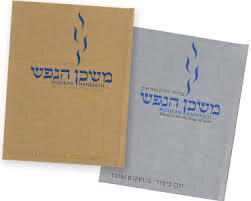
This year we will be using a new High Holiday prayerbook, Mishkan HaNefesh. We are very excited about this change. I am very much looking forward to using the Reform movement’s newly published machzor. After twenty years of using the old prayerbook I am ready for a change. We will of course still be treated to the same wonderful singing by our cantor. And the tradition’s Avinu Malkeinu and Kol Nidre will mark our days as they always have. We might be surprised, however, by some of the machzor’s innovations.
Next to all the Hebrew prayers one will now find English transliterations. This will provide an invitation for everyone to participate in our singing and praying. Also, the English translations, and readings, are more contemporary and modern. In addition, given that we were using several different editions of the old prayerbook, everyone will now be reading the same words. It is my belief that this new machzor will make our tradition’s prayers even more accessible.
One will also discover commentaries throughout the prayerbook explaining the High Holiday liturgy. Most beautiful of all, the machzor provides readings that help prepare our spirits for these Days of Awe. Arrayed on the pages one can find both traditional teachings and contemporary poems. While we will not read every line on every page, one is welcome to peruse these readings. The spirit of the day is to get lost in the prayerbook in order to emerge a stronger and better person. The pages of the machzor should not be viewed as a script as much as an invitation to look within at our souls. These prayers are not ends in themselves but tools to better ourselves.
How can we ask forgiveness of friends and family? How can we fill our hearts with gratitude?
And so as we prepare to enter the sanctuary, I offer two new readings from Mishkan HaNefesh.
First the traditional. Rabbi Israel Salanter was the founder of the Mussar movement of Orthodox Judaism. His goal was to return ethics to the center of Jewish life. Here is a story told about this great rabbi.
There must always be dancing.
Next to all the Hebrew prayers one will now find English transliterations. This will provide an invitation for everyone to participate in our singing and praying. Also, the English translations, and readings, are more contemporary and modern. In addition, given that we were using several different editions of the old prayerbook, everyone will now be reading the same words. It is my belief that this new machzor will make our tradition’s prayers even more accessible.
One will also discover commentaries throughout the prayerbook explaining the High Holiday liturgy. Most beautiful of all, the machzor provides readings that help prepare our spirits for these Days of Awe. Arrayed on the pages one can find both traditional teachings and contemporary poems. While we will not read every line on every page, one is welcome to peruse these readings. The spirit of the day is to get lost in the prayerbook in order to emerge a stronger and better person. The pages of the machzor should not be viewed as a script as much as an invitation to look within at our souls. These prayers are not ends in themselves but tools to better ourselves.
How can we ask forgiveness of friends and family? How can we fill our hearts with gratitude?
And so as we prepare to enter the sanctuary, I offer two new readings from Mishkan HaNefesh.
First the traditional. Rabbi Israel Salanter was the founder of the Mussar movement of Orthodox Judaism. His goal was to return ethics to the center of Jewish life. Here is a story told about this great rabbi.
Rabbi Israel Salanter once spent the night at a shoemaker’s home. Late at night, he saw the man working by the light of a flickering candle. “Look how late it is,” the rabbi said. “Your candle is about to go out. Why are you still working? The shoemaker replied, “As long as the candle is burning, it is still possible to mend.” For weeks afterward, Rabbi Israel Salanter was heard repeating the shoemaker’s words to himself: “As long as the candle is burning, it is still possible to mend.” As long as the candle burns—as long as the spark of life still shines—we can mend and heal, seek forgiveness and reconciliation. We can begin again.And now the contemporary. Lewis Thomas, a twentieth century American physician and writer, teaches:
Statistically, the probability of any one of us being here is so small that you’d think the mere fact of existing would keep us all in a contended dazzlement of surprise. We are alive against the stupendous odds of genetics, infinitely out-numbered by all the alternates who might, except for luck, be in our places. Even more astounding is our statistically improbability in physical terms. The normal, predictable state of matter throughout the universe is randomness, a relaxed sort of equilibrium, with atoms and their particles scattered around in an amorphous muddle. We, in brilliant contrast, are completely organized structures, squirming with information at every covalent bond. Add to this the biological improbability that makes each member of our own species unique. Each of us is a self-contained, free-standing individual, labeled by specific protein configurations at the surfaces of cells, identifiable whorls of fingertip skin, maybe even by special medleys of fragrance. You’d think we’d never stop dancing.And so yes, there will still be dancing!
There must always be dancing.
Cursing Our Way to Good
I don’t know very much Yiddish except a few words like shayna punim of which my unbiased grandmother believed I exhibited, chutzpah of which I have in apparent abundance and of course tuchus of which I have one. Recently, I learned a few more phrases and although I still have not achieved sufficient linguistic mastery, I have become enchanted with the language of my forebears. Yiddish is an extraordinarily colorful language filled with many creative ways to curse.
Here are but a few:
Still, I never understood why jumping in a lake, or the ocean for that matter, is a curse. I love the water. Perhaps our Yiddish forebears were not very good swimmers and they could imagine nothing worse than being lost in the immense ocean. Then again, it could be because the vastness of lakes and oceans renders the person insignificant. It is as if to say, “Get away from me. You mean nothing to me. You are as insignificant as a small speck in the vast ocean.”
Curses reveal so much about a culture. Take note of the understanding of Jewish tradition found in these Yiddish phrases. The empty night sky of a new moon reminds us that our tradition marks the holidays by the moon. The boisterous sounds of Purim celebrations must be embedded in the Jewish heart. Cursing elucidates a culture.
It reveals hidden secrets. Women, who were relegated to traditional roles in shtetl life, perhaps gained the last word. They said in effect, “Let all the worries I carry, whether or not, for example, our children and friends will have food this coming Shabbat find their way into the mind of that guy who studies and prays all day and night.”
This week the Torah confronts us with a litany of curses. If the people obey God’s commands they are promised blessings. These are succinct and to the point. If not, they are cursed:
Usually when chanting these verses the Torah reader does so in a quiet voice so as to deemphasize the curses. We say in effect, “Let us not say out loud what can befall us.” I wish instead to think about what all this color, and imagination, reveals. The Torah’s curses serve to accentuate the blessings. They are the dark contrast that reveal the promise.
Without such a bold, and imaginative, list we might remain unaware of the possibility to achieve good. Likewise, Yiddish provides a plethora of terms for underachievers. “He is such a schlemiel” comes to mind. Why? So as to remind us that failing to do good is but one slip up away. The line between success and failure is but one small curse away—and this is always within our reach. Doing good is our most important goal.
And then I remember that I know at least one more Yiddish word. And it is the crowning goal of the Yiddish language. It is what all these curses, as well as the many terms for underachievers, point towards. And that word is mensch. I long to hear my grandmother say, “You’re such a mensch.”
The great Yiddish writer, Isaac Bashevis Singer once joked, “What a strange power there is in clothing.” But he also added: “Kindness, I’ve discovered, is everything in life.”
Be a good person. Be a mensch. The rest is commentary—and of course a measure of imagination and humor can help lead us there.
Here are but a few:
All problems I have in my heart, should go to his head.And of course the well-known: “Go take a dump in the ocean.” The Yiddish is actually even more unseemly, but I will leave that to your imagination. Clearly this phrase is akin to the less colorful English curse, “Go jump in a lake” and means, “Get lost.”
God should visit upon him the best of the Ten Plagues.
He should have a large store, and whatever people ask for he shouldn’t have, and what he does have shouldn’t be requested.
His luck should be as bright as a new moon.
Your stomach will rumble so badly, you will think it was a Purim noisemaker.
Still, I never understood why jumping in a lake, or the ocean for that matter, is a curse. I love the water. Perhaps our Yiddish forebears were not very good swimmers and they could imagine nothing worse than being lost in the immense ocean. Then again, it could be because the vastness of lakes and oceans renders the person insignificant. It is as if to say, “Get away from me. You mean nothing to me. You are as insignificant as a small speck in the vast ocean.”
Curses reveal so much about a culture. Take note of the understanding of Jewish tradition found in these Yiddish phrases. The empty night sky of a new moon reminds us that our tradition marks the holidays by the moon. The boisterous sounds of Purim celebrations must be embedded in the Jewish heart. Cursing elucidates a culture.
It reveals hidden secrets. Women, who were relegated to traditional roles in shtetl life, perhaps gained the last word. They said in effect, “Let all the worries I carry, whether or not, for example, our children and friends will have food this coming Shabbat find their way into the mind of that guy who studies and prays all day and night.”
This week the Torah confronts us with a litany of curses. If the people obey God’s commands they are promised blessings. These are succinct and to the point. If not, they are cursed:
May the Lord strike you with consumption, fever, and inflammation, with scorching heat and drought, with blight and mildew; they shall hound you until you perish. The skies above your head shall be copper and the earth under you iron. The Lord will make the rain of your land dust, and sand shall drop on you from the sky, until you are wiped out. (Deuteronomy 28)The curses continue in inordinate detail, promising boil-scars, itches and hemorrhoids. The intention is clear. If the people do not follow God’s commands then they will be struck with what they most fear. Their crops will not thrive. They will rot as soon as they are planted. Their bodies will be plagued by disease. They will find no relief from their most bothersome symptoms. It hearkens to “God should visit upon him the best of the Ten Plagues.” Again the cursing is colorful and vivid. Little is left to the imagination.
Usually when chanting these verses the Torah reader does so in a quiet voice so as to deemphasize the curses. We say in effect, “Let us not say out loud what can befall us.” I wish instead to think about what all this color, and imagination, reveals. The Torah’s curses serve to accentuate the blessings. They are the dark contrast that reveal the promise.
Without such a bold, and imaginative, list we might remain unaware of the possibility to achieve good. Likewise, Yiddish provides a plethora of terms for underachievers. “He is such a schlemiel” comes to mind. Why? So as to remind us that failing to do good is but one slip up away. The line between success and failure is but one small curse away—and this is always within our reach. Doing good is our most important goal.
And then I remember that I know at least one more Yiddish word. And it is the crowning goal of the Yiddish language. It is what all these curses, as well as the many terms for underachievers, point towards. And that word is mensch. I long to hear my grandmother say, “You’re such a mensch.”
The great Yiddish writer, Isaac Bashevis Singer once joked, “What a strange power there is in clothing.” But he also added: “Kindness, I’ve discovered, is everything in life.”
Be a good person. Be a mensch. The rest is commentary—and of course a measure of imagination and humor can help lead us there.
Eighteen Years Later
What follows is Friday evening's sermon on the occasion of the eighteenth anniversary of 9-11.
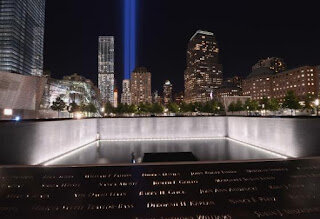
Eighteen years ago I could not have imagined such a moment. I can still see the empty, blue skies over our backyard, after we had collected our then five and seven year olds from school. “Can we let them play outside?” Susie and I debated. I looked up from our backyard, and marveled at the sky’s blueness and its emptiness, save the occasional military helicopters loudly hurtling towards Manhattan. “We can’t keep them locked inside,” we finally decided. And then we hurried them in and out as we struggled to make up our minds over and over again. Everything stopped on that day. We felt as if it might forever stop.
Ten years ago we would have protested the day Ari decided to begin his journey. “Wait until Thursday to leave,” we might have said. This year I could not get over how ordinary and routine the day seemed. Of course I cried all over again as I tuned into the countless services, and most especially the service at the 9-11 memorial. I watched with renewed pain the remembrances held throughout the country, and even the one held in Israel. Still I did what I always do on any given Wednesday. It seemed like any other September day. I am not saying of course that the day 9-11 is not among our most wrenching and sacrosanct days. Americans attended services, watched any number of memorials on TV, or not so great made for TV movies. On Wednesday we reacquainted ourselves with the pained stories of those lost and those who died trying to save others. I think of the firefighters running up those stairs, sensing they might never walk down. Their photographs arrayed in The New York Times are still etched in my thoughts; they are forever before my eyes. I think of all those rescue workers, police officers, construction workers and volunteers who rushed to Ground Zero to help but now, years later, are plagued with unimaginable health consequences.
And yet, on this past Wednesday most of us went about our day like any other Wednesday in September.
Some things return to normal. We go to work. We go out to dinners. We go into the city for the theatre. There were days back then when I never could have imagined that someone could create, or would create, the most beautiful and moving show about that dark day. And, until this past Sunday I refused to go see Come from Away. We go to the beach. We go to the airport. And then again, there were days back then when we thought that going to the airport might never again be possible. We laugh. We sing. We cry—but no longer only about that Tuesday from eighteen years ago. Everything has not stopped.
And some things are never again the same. We are still afraid. We are afraid of travel. Before that day there was no place on earth beyond the travel destinations of our American can do attitude. Now we take those State Department Travel warnings seriously. Fear is lodged in our American hearts. We hesitate. Everything has not stopped, but there is a pause in our step, a hesitation in our decision making. “Is it safe?” we ask over and over again. “There are so many people there. It might not be safe to go watch the parade,” we think. We hesitate to meet new people. It is easier to stick with the friends we know. We pause before opening our hearts to strangers. “They could be…you know…” we think, sometimes quietly and sometimes not so quietly.
The hope that was the defining characteristic of America, the hope that inspired my grandparents to traverse the ocean and build a life here for themselves, their children, grandchildren, and now great grandchildren, is now overwhelmed by fear. Now our children openly say what would have been blasphemy to my grandparent’s generation, “Is this country really the best country in the world?”
Eighteen years later, I am not sure how to help banish this fear. But I have learned this. Fear is a matter of the heart. It has nothing to do with metal detectors, armed guards and bomb sniffing dogs. There can never be 100% safety and security. Not when riding a bicycle, driving in a car, flying in an airplane or walking on the sidewalk. There is no place on earth that is not touched by suffering and pain, violence and terrorism. We cannot run. We cannot hide. Eighteen years ago, we were naïve. We did not know then what we know now. That recognition, that knowing, that painful experience has made us fearful and afraid. But the heart is not our master. It does not rule our lives. We can control the heart. We can master our feelings and most especially our fears. As the Psalmist said, “Though they might surround me, my heart shall not fear. Though war should rise against me, even then I will be confident.” (Psalm 27)
And so we can banish the terror; we can rid our hearts of fear. How? By not stopping. By not pausing. By at the very least, not hesitating so much and so often. By approaching the world, and other people, with more hope. By seeing in others the possibility for new insights and new loves. By looking to the world, and its many destinations, not just as potential enemies who may very well be arrayed against us, but as beacons for discovering some new truths. We must once again open our hearts to the world's nuances. We must no longer divide the world into us and them.
How do we banish fear? By not stopping. By not pausing. By not hesitating. Perhaps that answer was only just discovered this past Wednesday. Perhaps that answer can only begin to be discovered eighteen years later. This truth might still be found. It is found in going about our day like it was just another Wednesday in September. That is the most important thing we can do, and perhaps even the bravest thing we can do. We can push fear aside.
Fear need not rule our hearts.
Let Them Eat Grapes
Years ago when hiking through Israel, my guide would sometimes take a detour through a field. There she would reach up and take an orange from a tree, immediately peel off its skin and then eat it. I protested. “This is not your field. These oranges are not yours to take.” She would then correct my understanding. “Our Bible permits it.”
And the Torah proclaims: “When you enter your neighbor’s vineyard, you may eat as many grapes as you want, until you are full, but you must not put any in your vessel.” (Deuteronomy 25)
Our Bible has a different understanding of ownership. We do not own the land. The earth belongs to God and we are but tenants. So when I look to my backyard, the trees, and vines, might very well be mine but the food they produce is not just for my benefit.
The Torah makes clear. If you are hungry you can take the fruit from a tree. Even though the farmer has expended all the effort, and expense, to grow and nurture the tree, its fruit must be shared. Still you can only take a little bit, only enough to satiate your hunger. You may not take so much that you can fill a basket so that you are then able to sell the fruit in the market. That would be stealing.
And stealing is forbidden. Sharing is demanded.
While very few of us have vineyards or even know how to grow grapes, or even for that matter have fruit trees, imagine how different the world might be if we shared some fruit with our neighbors.
I dream.
And then I recall the fruit that spoils in my refrigerator, and the bag of half eaten grapes that makes its way into our garbage pail. I discard my dreams.
I must dream. I imagine. A world where all it takes for no one to know hunger is for each of us to offer one or two grapes here or there is within reach.
Sharing is commanded.
And the Torah proclaims: “When you enter your neighbor’s vineyard, you may eat as many grapes as you want, until you are full, but you must not put any in your vessel.” (Deuteronomy 25)
Our Bible has a different understanding of ownership. We do not own the land. The earth belongs to God and we are but tenants. So when I look to my backyard, the trees, and vines, might very well be mine but the food they produce is not just for my benefit.
The Torah makes clear. If you are hungry you can take the fruit from a tree. Even though the farmer has expended all the effort, and expense, to grow and nurture the tree, its fruit must be shared. Still you can only take a little bit, only enough to satiate your hunger. You may not take so much that you can fill a basket so that you are then able to sell the fruit in the market. That would be stealing.
And stealing is forbidden. Sharing is demanded.
While very few of us have vineyards or even know how to grow grapes, or even for that matter have fruit trees, imagine how different the world might be if we shared some fruit with our neighbors.
I dream.
And then I recall the fruit that spoils in my refrigerator, and the bag of half eaten grapes that makes its way into our garbage pail. I discard my dreams.
I must dream. I imagine. A world where all it takes for no one to know hunger is for each of us to offer one or two grapes here or there is within reach.
Sharing is commanded.
The Word is Our Ruler
I spend my days trying to uncover contemporary meaning in the weekly Torah reading. I pour over the Bible’s words to discover modern resonance.
This week I unfurled our sacred scroll and revealed these words:
Even the greatest king of Israel, David, is no greater than God’s Torah. Let’s take but one example. First, he commits adultery with Bathsheba. Then David has her husband, and loyal soldier, Uriah murdered. The prophet Nathan rebukes the king, reminding him that he is not above the law. Murder and adultery are forbidden for everyone—even the king.
In many other cultures, both then and now, such rebuke would be dismissed. And the prophet, or protester, would be jailed or killed. And herein lies David’s uniqueness, and perhaps his greatness. He repents. He admits his error. He atones for his sin. David bows to the law.
The Torah is our ruler. The law is our king.
Often when I take our students into the sanctuary, I open the Ark to show them our beautiful Torah scrolls. We discuss the colored robes that cover the scrolls. I point out the shiny silver crowns and breastplates that adorn them. I ask the students, “Who else wears a crown?” And they respond, “A king or a queen.” “Exactly,” I say.
Then I remind them that this is exactly Judaism’s most important teaching. We look up to the Torah as one might look up to a queen or king. The chapters and verses in these scrolls, the words inscribed by centuries of meaning, are what we worship.
One might think that such veneration, especially that of an ancient calligraphed scroll, means we live in the past. We do not. We live in the present but are nurtured by ancient words.
Yesterday’s words inform tomorrow’s promise.
Rabbi Ben Bag Bag said: “Turn it over, and again turn it over, for all is contained therein. And look into it; and become gray and old therein. And do not move away from it, for you have no better portion than it.”
To discover meaning all we have to do is to look at these ancient words anew. To recall our sacred task all we need do is unfurl this sacred scroll.
A book is our king. The word is our ruler.
This week I unfurled our sacred scroll and revealed these words:
When the king is seated on his royal throne, he shall have a copy of this Torah written for him…. Let it remain with him and let him read it all his life, so that he may learn to revere the Lord his God, to observe faithfully every word of this Torah... Thus, he will not act arrogantly toward his fellows or deviate from the instruction to the right or left… (Deuteronomy 17)When Saul is anointed the first king of Israel, God acquiesces to the people’s desire to be like all other nations. Appointing earthly rulers is a compromise. The Torah reminds us. Rulers must always remember that they serve a higher authority, that they serve the rules and laws given to prior generations.
Even the greatest king of Israel, David, is no greater than God’s Torah. Let’s take but one example. First, he commits adultery with Bathsheba. Then David has her husband, and loyal soldier, Uriah murdered. The prophet Nathan rebukes the king, reminding him that he is not above the law. Murder and adultery are forbidden for everyone—even the king.
In many other cultures, both then and now, such rebuke would be dismissed. And the prophet, or protester, would be jailed or killed. And herein lies David’s uniqueness, and perhaps his greatness. He repents. He admits his error. He atones for his sin. David bows to the law.
The Torah is our ruler. The law is our king.
Often when I take our students into the sanctuary, I open the Ark to show them our beautiful Torah scrolls. We discuss the colored robes that cover the scrolls. I point out the shiny silver crowns and breastplates that adorn them. I ask the students, “Who else wears a crown?” And they respond, “A king or a queen.” “Exactly,” I say.
Then I remind them that this is exactly Judaism’s most important teaching. We look up to the Torah as one might look up to a queen or king. The chapters and verses in these scrolls, the words inscribed by centuries of meaning, are what we worship.
One might think that such veneration, especially that of an ancient calligraphed scroll, means we live in the past. We do not. We live in the present but are nurtured by ancient words.
Yesterday’s words inform tomorrow’s promise.
Rabbi Ben Bag Bag said: “Turn it over, and again turn it over, for all is contained therein. And look into it; and become gray and old therein. And do not move away from it, for you have no better portion than it.”
To discover meaning all we have to do is to look at these ancient words anew. To recall our sacred task all we need do is unfurl this sacred scroll.
A book is our king. The word is our ruler.
Small Changes, Big Questions
This week we enter the Hebrew month of Elul, the season devoted to introspection as we prepare for the upcoming the High Holidays. We ask many questions of ourselves. What can I do differently? To whom should I offer apologies? How can I do better?
All these questions are connected to the very first question.
After God created Adam and Eve and placed them in their lavish new home, the Garden of Eden, God told them they could eat whichever fruits and vegetables they wanted, except the fruit from the tree of knowledge of good and evil. Of course, they did not listen. They ate the fruit. Then, when they heard God approaching, they became afraid and hid.
No one can hide from God. And God called out, “Ayekah—where are you?” God knew exactly where they were hiding, but God wanted Adam and Eve to own their mistake, to admit their error and amend their failings. Instead, Adam said, “It’s not my fault. It’s that woman’s doing.” (Hmm. The Torah sounds so contemporary!). And Eve said, “It wasn’t me. It was that talking snake.” (Hmm. There we go again blaming fictions instead of taking responsibility.)
No one should hide from questions.
Because Adam and Eve failed to admit their mistake and attempt to correct their wrongs, they were punished. God asked, “Where are you?” so that they might figure out where they stand. Instead they blamed others.
Repentance was only a question away.
Recently, my colleague Rabbi Judy Schindler taught that this one-word question, “ayekah” is similar to the Hebrew word, “aykha—woe.” This is the word that opens Jeremiah’s lament about Jerusalem’s destruction. “Woe! Lonely sits the city once great with people.” are the words that open our Tisha B’Av mourning. Woe is me is how we recall the destruction of the ancient Temples.
All that separates these Hebrew words are a few vowels. Add a dot, change a few of those mysterious symbols, and “where am I” is transformed into “woe is me.”
Most of the time we vocalize the wrongs that happen all around us by saying, “Woe is me.” We lament our misfortune. We cry to God about the injustices that befall us.
If the coming High Holidays, however, are going to have their intended meaning then we best ask, “Where am I?” Change is never accomplished by casting blame. It can only be achieved by asking questions. They must be as searing and probing as that very first question.
All that separates us from the repentance that is our most urgent task are a few vowels. All that stands in the way of change is something as small as a vowel.
All these questions are connected to the very first question.
After God created Adam and Eve and placed them in their lavish new home, the Garden of Eden, God told them they could eat whichever fruits and vegetables they wanted, except the fruit from the tree of knowledge of good and evil. Of course, they did not listen. They ate the fruit. Then, when they heard God approaching, they became afraid and hid.
No one can hide from God. And God called out, “Ayekah—where are you?” God knew exactly where they were hiding, but God wanted Adam and Eve to own their mistake, to admit their error and amend their failings. Instead, Adam said, “It’s not my fault. It’s that woman’s doing.” (Hmm. The Torah sounds so contemporary!). And Eve said, “It wasn’t me. It was that talking snake.” (Hmm. There we go again blaming fictions instead of taking responsibility.)
No one should hide from questions.
Because Adam and Eve failed to admit their mistake and attempt to correct their wrongs, they were punished. God asked, “Where are you?” so that they might figure out where they stand. Instead they blamed others.
Repentance was only a question away.
Recently, my colleague Rabbi Judy Schindler taught that this one-word question, “ayekah” is similar to the Hebrew word, “aykha—woe.” This is the word that opens Jeremiah’s lament about Jerusalem’s destruction. “Woe! Lonely sits the city once great with people.” are the words that open our Tisha B’Av mourning. Woe is me is how we recall the destruction of the ancient Temples.
All that separates these Hebrew words are a few vowels. Add a dot, change a few of those mysterious symbols, and “where am I” is transformed into “woe is me.”
Most of the time we vocalize the wrongs that happen all around us by saying, “Woe is me.” We lament our misfortune. We cry to God about the injustices that befall us.
If the coming High Holidays, however, are going to have their intended meaning then we best ask, “Where am I?” Change is never accomplished by casting blame. It can only be achieved by asking questions. They must be as searing and probing as that very first question.
All that separates us from the repentance that is our most urgent task are a few vowels. All that stands in the way of change is something as small as a vowel.
Let No One Tear Us Apart
This dizzying week has confirmed a number of beliefs. Let me reiterate them. 1) Some members of congress are Israel’s enemies. 2) Barring such enemies from visiting Israel is a terrible mistake. 3) The suggestion that some Jews’ loyalty to Israel should be doubted is divisive and terribly dismaying. Let’s unpack these affirmations.
Representatives Tlaib and Omar support the Boycott, Divestment and Sanctions movement who some suggest only wants to end Israel’s continued occupation of the West Bank. And while many Jews, and a fair number of Israelis, believe that Israel’s building of settlements and its control over West Bank Palestinians’ freedoms, threatens Israel’s security and undermines Israel’s democracy, the BDS movement really teaches that Zionism and the State of Israel are illegitimate.
Tlaib, for example, supports a one state solution rather than the creation of a sovereign Palestinian state alongside the Jewish state we love and admire....
Representatives Tlaib and Omar support the Boycott, Divestment and Sanctions movement who some suggest only wants to end Israel’s continued occupation of the West Bank. And while many Jews, and a fair number of Israelis, believe that Israel’s building of settlements and its control over West Bank Palestinians’ freedoms, threatens Israel’s security and undermines Israel’s democracy, the BDS movement really teaches that Zionism and the State of Israel are illegitimate.
Tlaib, for example, supports a one state solution rather than the creation of a sovereign Palestinian state alongside the Jewish state we love and admire....
Bucket Lists
We know a great deal about Moses’ life and his many accomplishments. We do not know much about his personal aspirations. I do know that there was one all important thing on his bucket list. He wanted to visit the land of Israel. Sadly, he never achieved this goal. He died on the other side of the Jordan River.
He pleaded with God. “Let me, I pray, cross over and see the good land on the other side of the Jordan…” God responded harshly, “Enough! Never speak to Me about this matter again.” (Deuteronomy 3)
Our hero’s bucket list remained unfulfilled. It was a simple list. It contained only one item. The reason why Moses is Moses is because he did not ask much for himself. He was all about the mission and little about his own wants. True, he occasionally lost his temper. And this is the stated reason why he is not allowed to enter the land.
I think, however, that his impatience, and anger, are understandable. It’s not like he had an easy job. At the age of 80 he is tasked with leading the difficult, and ever complaining, and occasionally outright rebellious, Israelites through the wilderness. He really did not want the job. God coaxed him. And then it ends up lasting forty years. His frustration is understandable.
One can imagine Moses saying, “I just want to touch the Promised Land with my own hands and feet before I die.” And I am left wondering why God would not grant him this one request.
Then again, I wonder about bucket lists. They are all about personal aspirations. I want to go to Alaska. I want to visit Vietnam. I want to climb Mount Everest. (No, not really.) I want to go sky diving. (Ok, maybe.) I want to complete an Ironman. One day, I want to sail wherever the winds and waves might take me.
Bucket lists are all about what I want, where I want to go and what I want to do. They are about the about the places I want to see, the cultures I find fascinating and the heretofore unimaginable things I might learn doing these things. They are about the people I could possibly meet on my travels and the self-discovery I might achieve. They are about the experiences I hope to achieve.
Bucket lists are about imagining the personal fulfillment we might gain in the allotted years we are granted. If only every one of us were to be blessed with a lifetime of Moses’ 120 years! This is the nature of bucket lists. Each of us writes, and rewrites, these lists. They seem to grow longer with each passing year.
Friends return from their travels and regale us about what they saw and what they experienced and most importantly about where they ate. We take notes. More items are added. The world gets even bigger. Such lists are not bad. Rabbi Hillel reminds us: “If I am not for myself, who will be for me? And if I am only for myself what am I?”
It is just that bucket lists are really more about ourselves than the world.
What if our lists looked more like Moses’? What if the personal ask was only one item long and the rest of the list was about how we are going to help others get to their promised land?
Imagine that. Our personal fulfillment might better be achieved by lifting others up and helping others master their goals.
And I imagine that then the world might seem smaller. And our lives might no longer seem so overwhelming.
He pleaded with God. “Let me, I pray, cross over and see the good land on the other side of the Jordan…” God responded harshly, “Enough! Never speak to Me about this matter again.” (Deuteronomy 3)
Our hero’s bucket list remained unfulfilled. It was a simple list. It contained only one item. The reason why Moses is Moses is because he did not ask much for himself. He was all about the mission and little about his own wants. True, he occasionally lost his temper. And this is the stated reason why he is not allowed to enter the land.
I think, however, that his impatience, and anger, are understandable. It’s not like he had an easy job. At the age of 80 he is tasked with leading the difficult, and ever complaining, and occasionally outright rebellious, Israelites through the wilderness. He really did not want the job. God coaxed him. And then it ends up lasting forty years. His frustration is understandable.
One can imagine Moses saying, “I just want to touch the Promised Land with my own hands and feet before I die.” And I am left wondering why God would not grant him this one request.
Then again, I wonder about bucket lists. They are all about personal aspirations. I want to go to Alaska. I want to visit Vietnam. I want to climb Mount Everest. (No, not really.) I want to go sky diving. (Ok, maybe.) I want to complete an Ironman. One day, I want to sail wherever the winds and waves might take me.
Bucket lists are all about what I want, where I want to go and what I want to do. They are about the about the places I want to see, the cultures I find fascinating and the heretofore unimaginable things I might learn doing these things. They are about the people I could possibly meet on my travels and the self-discovery I might achieve. They are about the experiences I hope to achieve.
Bucket lists are about imagining the personal fulfillment we might gain in the allotted years we are granted. If only every one of us were to be blessed with a lifetime of Moses’ 120 years! This is the nature of bucket lists. Each of us writes, and rewrites, these lists. They seem to grow longer with each passing year.
Friends return from their travels and regale us about what they saw and what they experienced and most importantly about where they ate. We take notes. More items are added. The world gets even bigger. Such lists are not bad. Rabbi Hillel reminds us: “If I am not for myself, who will be for me? And if I am only for myself what am I?”
It is just that bucket lists are really more about ourselves than the world.
What if our lists looked more like Moses’? What if the personal ask was only one item long and the rest of the list was about how we are going to help others get to their promised land?
Imagine that. Our personal fulfillment might better be achieved by lifting others up and helping others master their goals.
And I imagine that then the world might seem smaller. And our lives might no longer seem so overwhelming.
No More Mourning
In 1966, the Israeli author, Shai Agnon, received the Nobel Prize in Literature. When accepting the award, he said:
It was about dreaming.
Tisha B’Av, which occurs on Sunday, commemorates a number of Jewish tragedies....
As a result of the historic catastrophe in which Titus of Rome destroyed Jerusalem and Israel was exiled from its land, I was born in one of the cities of the Exile. But always I regarded myself as one who was born in Jerusalem. In a dream, in a vision of the night, I saw myself standing with my brother-Levites in the Holy Temple, singing with them the songs of David, King of Israel, melodies such as no ear has heard since the day our city was destroyed and its people went into exile…. I was five years old when I wrote my first song. It was out of longing for my father that I wrote it.The genius and creativity spanning the 2,000 years since that historic catastrophe found its impetus in longing.
It was about dreaming.
Tisha B’Av, which occurs on Sunday, commemorates a number of Jewish tragedies....
Tell the Truth
A brief comment on some ancient, and seemingly out of date, words.
The Torah states: “Moses spoke to the heads of the Israelite tribes, saying, ‘This is what the Lord has commanded: when people make vows or take an oath, they shall not break their pledge; they must carry out all that has crossed their lips.’” (Numbers 30)
The rabbis ask, “Why did Moses speak to the heads of the tribes? Why did he direct his words to the leaders and not all the people?”
The Hatam Sofer, a leading 19th century rabbi, responds: “The reason is that it is often leaders who make all types of promises which they don’t keep. Because they often go back on their promises, this warning was aimed specifically at them.”
Such is the teaching that occurred to me when watching this week’s presidential debates.
Such is the response to those who suggest the Torah has nothing to say about our contemporary struggles.
Leaders, especially those who wish to become president, should be the most careful with their words. They should be even more careful than everyone else.
The Torah remains up to date.
The Torah states: “Moses spoke to the heads of the Israelite tribes, saying, ‘This is what the Lord has commanded: when people make vows or take an oath, they shall not break their pledge; they must carry out all that has crossed their lips.’” (Numbers 30)
The rabbis ask, “Why did Moses speak to the heads of the tribes? Why did he direct his words to the leaders and not all the people?”
The Hatam Sofer, a leading 19th century rabbi, responds: “The reason is that it is often leaders who make all types of promises which they don’t keep. Because they often go back on their promises, this warning was aimed specifically at them.”
Such is the teaching that occurred to me when watching this week’s presidential debates.
Such is the response to those who suggest the Torah has nothing to say about our contemporary struggles.
Leaders, especially those who wish to become president, should be the most careful with their words. They should be even more careful than everyone else.
The Torah remains up to date.
Passion and Zealotry
The Talmud counsels: “Rabbi Hisda taught: 'If the zealot comes to seek counsel, we never instruct him to act.'" (Sanhedrin 81b)
And yet the Torah reports that Pinchas was rewarded for his actions. Here is his story. The people are gathered on the banks of the Jordan River, poised to enter the land of Israel. They have become enthralled with the religion of the Midianites, sacrificing to their god, and participating in its festivals. Moses tries to get the Israelites to stop, issuing laws forbidding such foreign practices, but they refuse to listen. God becomes enraged.
"Just then one of the Israelites came and brought a Midianite woman over to his companions... When Pinchas saw this he left the assembly and taking a spear in his hand he followed the Israelite into the chamber and stabbed both of them, the Israelite and the woman, through the belly." The Lord spoke to Moses, saying, "Pinchas has turned back My wrath from the Israelites by displaying among them his passion for Me." (Numbers 25) Pinchas' passion tempers God’s anger. Thus Pinchas renews the covenant between God and the people.
It is for this reason that Pinchas’ memory is recalled at the brit milah ceremony. As we renew the covenant through the ritual of circumcision we recall Pinchas. We then welcome the presence of the prophet Elijah who, in the future, will announce the coming of the messiah. We pray, “This is the chair of Elijah the prophet who is remembered for good.” Perhaps this young child will prove to be our people’s redeemer.
Elijah is as well a zealot. He, like Pinchas, has a violent temper and deals with non-believers with an equally heavy hand. He kills hundreds of idolaters and worshipers of Baal. So why are these the heroes we recall when we circumcise our sons? Is it possible that the rabbis saw this ritual and its demand that we take a knife to our sons as a zealous act? Was this their nod to the intense passion that is required to perform the mitzvah of circumcision?
The Torah suggests that an act is made holy by one’s intention, that the ends justify even extreme means. Pinchas succeeds in ridding the Israelites of idolatry. Elijah as well bests the prophets of Baal, bringing the people closer to monotheism. They are thus revered by our tradition.
I remain troubled. I stand appalled.
I wonder. Why must passions lead to zealous acts?
Zealousness and passion are too often intertwined. Passion is desired. Zealousness must be quelled. The knife can be an instrument of holiness or a tool for murder.
My teacher at the Shalom Hartman Institute, Dr. Israel Knohl, once remarked that monotheism is given to violence. Because it is adamant that there is only one God it promotes the destruction of other gods and occasionally, or perhaps it is better to say, too often, their worshippers. Monotheism is exacting. It can be as well ruthless.
I hold firm to its belief. I remain distant from the actions it too frequently deems holy.
And so I draw a measure of comfort from the very same prophet whose actions I abhor. Elijah’s story concludes with a beautiful estimation of where we might find God. It is not in a thunderous voice or mighty actions. "There was a great and mighty wind, splitting mountains and shattering rocks, but the Lord was not in the wind... After the earthquake—fire; but the Lord was not in the fire. And after the fire, a still, small voice." (I Kings 19)
This is the Haftarah that is often paired with this week’s portion. The rabbis offer this reading as a counterweight. We require passion, but not zealousness. Not every disagreement is a threat that necessitates radical action. Believing in one God does not require that we destroy others, or their followers. A plurality of beliefs does not negate our own firmly held convictions.
Hold fast to your own beliefs. Leave room for others’ convictions.
The Rabbis teach! If the zealot comes to seek counsel, we never instruct him to act.
Rely instead on the still, small voice.
And yet the Torah reports that Pinchas was rewarded for his actions. Here is his story. The people are gathered on the banks of the Jordan River, poised to enter the land of Israel. They have become enthralled with the religion of the Midianites, sacrificing to their god, and participating in its festivals. Moses tries to get the Israelites to stop, issuing laws forbidding such foreign practices, but they refuse to listen. God becomes enraged.
"Just then one of the Israelites came and brought a Midianite woman over to his companions... When Pinchas saw this he left the assembly and taking a spear in his hand he followed the Israelite into the chamber and stabbed both of them, the Israelite and the woman, through the belly." The Lord spoke to Moses, saying, "Pinchas has turned back My wrath from the Israelites by displaying among them his passion for Me." (Numbers 25) Pinchas' passion tempers God’s anger. Thus Pinchas renews the covenant between God and the people.
It is for this reason that Pinchas’ memory is recalled at the brit milah ceremony. As we renew the covenant through the ritual of circumcision we recall Pinchas. We then welcome the presence of the prophet Elijah who, in the future, will announce the coming of the messiah. We pray, “This is the chair of Elijah the prophet who is remembered for good.” Perhaps this young child will prove to be our people’s redeemer.
Elijah is as well a zealot. He, like Pinchas, has a violent temper and deals with non-believers with an equally heavy hand. He kills hundreds of idolaters and worshipers of Baal. So why are these the heroes we recall when we circumcise our sons? Is it possible that the rabbis saw this ritual and its demand that we take a knife to our sons as a zealous act? Was this their nod to the intense passion that is required to perform the mitzvah of circumcision?
The Torah suggests that an act is made holy by one’s intention, that the ends justify even extreme means. Pinchas succeeds in ridding the Israelites of idolatry. Elijah as well bests the prophets of Baal, bringing the people closer to monotheism. They are thus revered by our tradition.
I remain troubled. I stand appalled.
I wonder. Why must passions lead to zealous acts?
Zealousness and passion are too often intertwined. Passion is desired. Zealousness must be quelled. The knife can be an instrument of holiness or a tool for murder.
My teacher at the Shalom Hartman Institute, Dr. Israel Knohl, once remarked that monotheism is given to violence. Because it is adamant that there is only one God it promotes the destruction of other gods and occasionally, or perhaps it is better to say, too often, their worshippers. Monotheism is exacting. It can be as well ruthless.
I hold firm to its belief. I remain distant from the actions it too frequently deems holy.
And so I draw a measure of comfort from the very same prophet whose actions I abhor. Elijah’s story concludes with a beautiful estimation of where we might find God. It is not in a thunderous voice or mighty actions. "There was a great and mighty wind, splitting mountains and shattering rocks, but the Lord was not in the wind... After the earthquake—fire; but the Lord was not in the fire. And after the fire, a still, small voice." (I Kings 19)
This is the Haftarah that is often paired with this week’s portion. The rabbis offer this reading as a counterweight. We require passion, but not zealousness. Not every disagreement is a threat that necessitates radical action. Believing in one God does not require that we destroy others, or their followers. A plurality of beliefs does not negate our own firmly held convictions.
Hold fast to your own beliefs. Leave room for others’ convictions.
The Rabbis teach! If the zealot comes to seek counsel, we never instruct him to act.
Rely instead on the still, small voice.
King David's Footsteps
Several days ago, I hiked in the footsteps of King David. The words of the Bible became real. They became filled with life.
In Israel one can literally walk where our biblical heroes traveled. One can stand where Abraham nearly sacrificed Isaac or where the prophet Amos admonished the Jewish people or where David composed his sweet psalms.
In the land of Israel our Bible takes shape. It is here that the soil adds flesh to our legends.
Before beginning the hike, we stood on the heights of Tel Azekah where the Israelites spied the Philistine army. It was there that our people cowered in fear before the mighty Goliath. A young David volunteered to battle the giant. He refused the offer of King Saul’s armor and spear. He thought them too cumbersome and heavy. David killed Goliath with a small pebble thrown from his slingshot. The Israelite army then routed the Philistines and the Israelites soon crowned David as king.
The legend of David and Goliath was born here, in this place....
In Israel one can literally walk where our biblical heroes traveled. One can stand where Abraham nearly sacrificed Isaac or where the prophet Amos admonished the Jewish people or where David composed his sweet psalms.
In the land of Israel our Bible takes shape. It is here that the soil adds flesh to our legends.
Before beginning the hike, we stood on the heights of Tel Azekah where the Israelites spied the Philistine army. It was there that our people cowered in fear before the mighty Goliath. A young David volunteered to battle the giant. He refused the offer of King Saul’s armor and spear. He thought them too cumbersome and heavy. David killed Goliath with a small pebble thrown from his slingshot. The Israelite army then routed the Philistines and the Israelites soon crowned David as king.
The legend of David and Goliath was born here, in this place....
The Pattern of Failures
I am writing from Jerusalem where I am studying at the Shalom Hartman Institute’s Rabbinic Torah Study Seminar. I remain grateful that our congregation recognizes the need for me to deepen my learning and recharge my commitments. There is really nothing like studying with colleagues and learning from remarkable teachers, and most especially, to do so here in Jerusalem. No matter how many times I may visit this city, every time I return becomes a pilgrimage in which my spirit is renewed.
This morning I was reminded of a favorite saying of my teacher Rabbi David Hartman, may his memory be for a blessing. He often said that the Bible is an indictment of the Jewish people. Like so many of Reb David’s teachings, this appears counter intuitive. We often look to the Bible as inspiration. We hold it up time and again as the best source to motivate us to do good or for that matter, the justification to observe the Jewish holidays, or as in my present case, the cause for me to return to this holy city, year after year, or, and perhaps most especially, to re-establish sovereignty in this land after 2,000 years of wandering.
Rabbi Hartman of course saw something far different and perhaps far more in the Bible’s words. It was more about our failings than our successes. It was more about not living up to what was asked of us rather than fulfilling God’s commandments. Take the prophets for example who over and over again chastise the Jewish people for failing to live up to God’s expectations. Each and every one of them, from Amos to Isaiah, say in effect, “Do you think this is all God wants you to do!” They thundered, “It is not enough to go to services. It is not enough to light candles.”
Their exhortations can be summed up with the words, “It is not enough.”
And when one looks at the grand narrative portrayed in the Bible, as we did this morning with Micah Goodman, the author of the acclaimed book Catch-67, one realizes that the story does not culminate with the Jewish people establishing a nation in the promised land of Israel, but instead with their return to Egypt. We leave Egypt following Moses’ lead, wander the wilderness, conquer the land under Joshua, establish the rule of kings and build the Temple. But then during the years that the prophet Jeremiah prophesies, the Babylonians destroy the holy Temple and establish Gedaliah as their puppet king. He is soon assassinated by a fellow Jew.
The Book of Kings then concludes: “And all the people, young and old, and the officers of the troops set out and went to Egypt because they were afraid of the Babylonians.” (II Kings 25). History is cyclical. We were taken out of Egypt only to return to Egypt. Our powerlessness was transformed into power and then again to powerlessness.
The movement, and struggle, between power and powerlessness continues in our own age.
Back to the Bible and in particular this week’s Torah reading. Even the Five Books of Moses is not the crowning achievement of the very person who heralds its name, but instead stands as an indictment against Moses and an elucidation of his shortcomings. We read about why God does not allow him to enter the land. The people are once again complaining. There is a lot of that in the Book of Numbers. (That alone should stand as evidence of David Hartman’s teaching.) There is not enough water. God tells Moses and Aaron to instruct a rock to bring water. Moses instead hits the rock and says, “Listen, you rebels, shall we get water for you out of this rock?” (Numbers 20)
And with that, God decides that Moses does not get to enter the land. Commentators debate what was Moses’ exact sin. Was it that he hit the rock not just one time, but two? Was it instead that he became angry, again, at the people? Was it that he took credit for God’s miracle? Was it that he drew a stark line between the people and their leader and insulted them by calling them rebels?
The Bible is unclear. It is however clear that God thinks Moses’ time is done. He failed as a leader. The Five Books of Moses indicts its very own author.
Perhaps that is the Bible’s very inspiration. Failure is part and parcel to our lives.
Failure is part of our history.
Leaving Egypt and then returning to Egypt, and then leaving again and returning again, is the pattern of our destiny.
This morning I was reminded of a favorite saying of my teacher Rabbi David Hartman, may his memory be for a blessing. He often said that the Bible is an indictment of the Jewish people. Like so many of Reb David’s teachings, this appears counter intuitive. We often look to the Bible as inspiration. We hold it up time and again as the best source to motivate us to do good or for that matter, the justification to observe the Jewish holidays, or as in my present case, the cause for me to return to this holy city, year after year, or, and perhaps most especially, to re-establish sovereignty in this land after 2,000 years of wandering.
Rabbi Hartman of course saw something far different and perhaps far more in the Bible’s words. It was more about our failings than our successes. It was more about not living up to what was asked of us rather than fulfilling God’s commandments. Take the prophets for example who over and over again chastise the Jewish people for failing to live up to God’s expectations. Each and every one of them, from Amos to Isaiah, say in effect, “Do you think this is all God wants you to do!” They thundered, “It is not enough to go to services. It is not enough to light candles.”
Their exhortations can be summed up with the words, “It is not enough.”
And when one looks at the grand narrative portrayed in the Bible, as we did this morning with Micah Goodman, the author of the acclaimed book Catch-67, one realizes that the story does not culminate with the Jewish people establishing a nation in the promised land of Israel, but instead with their return to Egypt. We leave Egypt following Moses’ lead, wander the wilderness, conquer the land under Joshua, establish the rule of kings and build the Temple. But then during the years that the prophet Jeremiah prophesies, the Babylonians destroy the holy Temple and establish Gedaliah as their puppet king. He is soon assassinated by a fellow Jew.
The Book of Kings then concludes: “And all the people, young and old, and the officers of the troops set out and went to Egypt because they were afraid of the Babylonians.” (II Kings 25). History is cyclical. We were taken out of Egypt only to return to Egypt. Our powerlessness was transformed into power and then again to powerlessness.
The movement, and struggle, between power and powerlessness continues in our own age.
Back to the Bible and in particular this week’s Torah reading. Even the Five Books of Moses is not the crowning achievement of the very person who heralds its name, but instead stands as an indictment against Moses and an elucidation of his shortcomings. We read about why God does not allow him to enter the land. The people are once again complaining. There is a lot of that in the Book of Numbers. (That alone should stand as evidence of David Hartman’s teaching.) There is not enough water. God tells Moses and Aaron to instruct a rock to bring water. Moses instead hits the rock and says, “Listen, you rebels, shall we get water for you out of this rock?” (Numbers 20)
And with that, God decides that Moses does not get to enter the land. Commentators debate what was Moses’ exact sin. Was it that he hit the rock not just one time, but two? Was it instead that he became angry, again, at the people? Was it that he took credit for God’s miracle? Was it that he drew a stark line between the people and their leader and insulted them by calling them rebels?
The Bible is unclear. It is however clear that God thinks Moses’ time is done. He failed as a leader. The Five Books of Moses indicts its very own author.
Perhaps that is the Bible’s very inspiration. Failure is part and parcel to our lives.
Failure is part of our history.
Leaving Egypt and then returning to Egypt, and then leaving again and returning again, is the pattern of our destiny.
Why I'm Both Celebrating the Myth and Honoring the Anger
I wonder how Korah’s descendants describe this week’s events described in the synagogue’s weekly Torah reading. Would it be akin to the accolades we heap on Bar Kochba who led a failed a rebellion against Rome in the second century? To this day we sing of his courage when we recall Rabbi Akiva’s martyrdom on our holiest of days, Yom Kippur. Akiva was one of Bar Kochba’s greatest supporters.
Moses ruthlessly quashed Korah’s rebellion (revolution?). He killed Korah and 250 of his followers. Would my hero Moses be called a murderer by Korah’s descendants?
“Blasphemy!” one might say.
Years ago, I traveled to Israel on a UJA mission. It was during the second intifada and we were there to show our support and express our solidarity. Yitzhah Rabin was assassinated five years earlier and my companions and I were deeply traumatized by his murder and the increasingly deadly Palestinian terrorist attacks.
We mourned the soldier turned prime minister turned peace maker....
Moses ruthlessly quashed Korah’s rebellion (revolution?). He killed Korah and 250 of his followers. Would my hero Moses be called a murderer by Korah’s descendants?
“Blasphemy!” one might say.
Years ago, I traveled to Israel on a UJA mission. It was during the second intifada and we were there to show our support and express our solidarity. Yitzhah Rabin was assassinated five years earlier and my companions and I were deeply traumatized by his murder and the increasingly deadly Palestinian terrorist attacks.
We mourned the soldier turned prime minister turned peace maker....
Today's Anguish
The spies return from scouting the land of Israel. Ten return with a negative report. They say: “All the people that we saw in it were men of great size and we looked like grasshoppers to ourselves.” (Numbers 13)
Every morning I read the newspapers. Every evening I watch the TV news. During the day I read online reports.
The other day a father and daughter drowned in the Rio Grande while trying to cross the United States-Mexico border. Their names were Oscar Alberto and Valerie Martinez Ramirez. Many others have discovered a similar fate. Some fled worn torn Syria. Others ran from persecution in Sudan. Some escaped violence in Central America. Others left poverty in Venezuela.
They see in America a promise and hope.
Every morning I read the newspapers. Every evening I watch the TV news. During the day I read online reports.
And that is all I seem to do.
I offer up excuses for going about my day as if the plight of refugees and asylum seekers is normal. “But I have to buy a new pair of pants. But I have dinner plans. But I have to work out.” The problems seem enormous. They appear insurmountable. What can I do?
More! At the very least.
A father and daughter drowned at our nation’s border.
Regardless of our disagreements about immigration policy our humanity demands more of us. Our tradition asks us to do better. A father does not risk his daughter’s life out of folly. He traverses a raging river only because desperation propels him. I may not understand the specifics of his desperation, but I cannot imagine any other reason.
I have never faced such a decision. I have never needed to take such risks.
And I look like a grasshopper to myself.
I wish I could muster the strength of Joshua. I wish I could summon the courage of Caleb. They were the spies who did not see the giants. They refused to see the enormity of what stood before them. Their faith was unrivaled.
Perhaps the ten spies were realists. Perhaps the challenges they faced were in fact gigantic.
And Joshua and Caleb were idealists.
I long to hold on to their ideals. I reach for their words:
“Have no fear of them!”
I read. Have no fear. I must do more.
Every morning I read the newspapers. Every evening I watch the TV news. During the day I read online reports.
The other day a father and daughter drowned in the Rio Grande while trying to cross the United States-Mexico border. Their names were Oscar Alberto and Valerie Martinez Ramirez. Many others have discovered a similar fate. Some fled worn torn Syria. Others ran from persecution in Sudan. Some escaped violence in Central America. Others left poverty in Venezuela.
They see in America a promise and hope.
Every morning I read the newspapers. Every evening I watch the TV news. During the day I read online reports.
And that is all I seem to do.
I offer up excuses for going about my day as if the plight of refugees and asylum seekers is normal. “But I have to buy a new pair of pants. But I have dinner plans. But I have to work out.” The problems seem enormous. They appear insurmountable. What can I do?
More! At the very least.
A father and daughter drowned at our nation’s border.
Regardless of our disagreements about immigration policy our humanity demands more of us. Our tradition asks us to do better. A father does not risk his daughter’s life out of folly. He traverses a raging river only because desperation propels him. I may not understand the specifics of his desperation, but I cannot imagine any other reason.
I have never faced such a decision. I have never needed to take such risks.
And I look like a grasshopper to myself.
I wish I could muster the strength of Joshua. I wish I could summon the courage of Caleb. They were the spies who did not see the giants. They refused to see the enormity of what stood before them. Their faith was unrivaled.
Perhaps the ten spies were realists. Perhaps the challenges they faced were in fact gigantic.
And Joshua and Caleb were idealists.
I long to hold on to their ideals. I reach for their words:
“Have no fear of them!”
I read. Have no fear. I must do more.
Gossip Disfigures
How dare anyone criticize our leader!
We read: “Miriam spoke against Moses because of the Cushite woman he had married.” (Numbers 12) We learn elsewhere that Moses’ wife is Zipporah. She is a Midianite. This week the Torah suggests that she is dark-skinned and therefore perhaps from Ethiopia. She is not an Israelite. Was this the basis of Miriam’s criticism of her brother Moses?
How dare he marry a foreigner!
Their brother Aaron joins the critique. He and Miriam pile on more harsh words, “Has the Lord spoken only through Moses? Has God not spoken through us as well?” Were they jealous of their brother Moses? Did they want to lead the Israelites as well? Did they believe, as Judaism does, that everyone can have a relationship with God and that anyone, with enough wisdom and learning, can lead?
Perhaps our leader thinks too much of himself. Perhaps he denigrates the holy spark found in each and every person.
Rashi, the great medieval commentator, disagrees. He imagines Miriam criticizing her brother for neglecting his wife. Moses is singularly devoted to his mission. He is on call for God at all hours of the day and night. Miriam therefore worries about her sister in law’s well-being. She worries about her brother’s marriage and family.
I wonder. Is the best teaching offering by the very person who falls short of fulfilling its words? Rashi authored a line-by-line commentary to the entire Bible and Talmud. How did he find time for his own family? Miriam reminds us. No job is more important than family. No task, even one divinely ordained, should take precedence over those closest to us.
God apparently disagrees. Miriam is punished and stricken with leprosy. Aaron is left alone to plea for his sister, “O, my lord, account not to us the sin which we committed in our folly.”
The rabbis suggest that it was not what Miriam said but the manner in which she spoke the words. They see a parallel between this disfiguring disease and gossip. The tradition is clear. Even if the words are true they must only be spoken when absolutely necessary and then only in private. Critique becomes gossip when it finds its way into the public domain. Criticism becomes slander when it seeks to demean others rather than uplift them.
Gossip disfigures. A Hasidic story relates that it is like a feather cast to the wind. Such words can never be collected. Once gossip is shared it can never be withdrawn. The damage to a person’s reputation might never be undone. Beware of what one tweets! Judaism counsels. Gossip disfigures the gossiper.
A person’s character unravels when she or he gossips. The rabbis remind us that gossip not only belittles the person about whom we talk but also damages the person who speaks such words. Gossip denigrates everyone—even and including the person who listens.
And so we must offer prayers of contrition for all the times we resorted to gossip to entertain. We pray for all the moments we gossiped in order to give ourselves a greater sense of self-worth. We pray for all the minutes we inclined our ears to the gossip that others shared. We pray with Moses, “O God, pray, heal her.”
Heal us!
We read: “Miriam spoke against Moses because of the Cushite woman he had married.” (Numbers 12) We learn elsewhere that Moses’ wife is Zipporah. She is a Midianite. This week the Torah suggests that she is dark-skinned and therefore perhaps from Ethiopia. She is not an Israelite. Was this the basis of Miriam’s criticism of her brother Moses?
How dare he marry a foreigner!
Their brother Aaron joins the critique. He and Miriam pile on more harsh words, “Has the Lord spoken only through Moses? Has God not spoken through us as well?” Were they jealous of their brother Moses? Did they want to lead the Israelites as well? Did they believe, as Judaism does, that everyone can have a relationship with God and that anyone, with enough wisdom and learning, can lead?
Perhaps our leader thinks too much of himself. Perhaps he denigrates the holy spark found in each and every person.
Rashi, the great medieval commentator, disagrees. He imagines Miriam criticizing her brother for neglecting his wife. Moses is singularly devoted to his mission. He is on call for God at all hours of the day and night. Miriam therefore worries about her sister in law’s well-being. She worries about her brother’s marriage and family.
I wonder. Is the best teaching offering by the very person who falls short of fulfilling its words? Rashi authored a line-by-line commentary to the entire Bible and Talmud. How did he find time for his own family? Miriam reminds us. No job is more important than family. No task, even one divinely ordained, should take precedence over those closest to us.
God apparently disagrees. Miriam is punished and stricken with leprosy. Aaron is left alone to plea for his sister, “O, my lord, account not to us the sin which we committed in our folly.”
The rabbis suggest that it was not what Miriam said but the manner in which she spoke the words. They see a parallel between this disfiguring disease and gossip. The tradition is clear. Even if the words are true they must only be spoken when absolutely necessary and then only in private. Critique becomes gossip when it finds its way into the public domain. Criticism becomes slander when it seeks to demean others rather than uplift them.
Gossip disfigures. A Hasidic story relates that it is like a feather cast to the wind. Such words can never be collected. Once gossip is shared it can never be withdrawn. The damage to a person’s reputation might never be undone. Beware of what one tweets! Judaism counsels. Gossip disfigures the gossiper.
A person’s character unravels when she or he gossips. The rabbis remind us that gossip not only belittles the person about whom we talk but also damages the person who speaks such words. Gossip denigrates everyone—even and including the person who listens.
And so we must offer prayers of contrition for all the times we resorted to gossip to entertain. We pray for all the moments we gossiped in order to give ourselves a greater sense of self-worth. We pray for all the minutes we inclined our ears to the gossip that others shared. We pray with Moses, “O God, pray, heal her.”
Heal us!
Making Peace
The Ktav Sofer, a leading nineteenth century Hungarian rabbi, comments: “Peace begins in the home, then extends to the community, and finally to all the world.”
It is a fascinating lesson. Often we speak about bringing peace to the world but forget about making peace with those who stand closest to us. We give lofty speeches and sermons (rabbi!) about making peace between the Israelis and Palestinians, or between Democrats and Republicans but neglect making peace with those we profess love. But such grandiose endeavors are impossible if we do not begin with a foundation of peace in our personal relationships.
If couples argue at home, then they often bring divisiveness to work. If parents yell at their children, then their children bring anger to school.
We cannot make peace if we don’t feel at peace. If our interactions with others are rife with conflict and discord then how can we bring peace or for that matter, negotiate peace? Judaism has long recognized the centrality of peace. It teaches about its necessity. Shalom bayit, peace in the home, is of paramount importance. Other values take second to preserving it.
And this is why so many of our prayers speak of peace. The central prayer we recite whenever we gather concludes with a prayer for peace. The Amidah may offer a litany of requests: for health, forgiveness and justice to name a few, but we always conclude with the words: “Blessed are You Adonai who blesses Your people Israel with peace.” We conclude as well the Blessing after Meals with the prayer: “Oseh shalom bimromav…May the One who makes peace in the high heavens make peace for us, for all Israel and all who inhabit the earth.” The Kaddish also concludes with these same words.
We pray for peace so we might have the strength to bring peace.
This week we learn the words for the priestly blessing. These are the words I am often privileged to recite at baby namings, bnai mitzvah and weddings. “May the Lord bless you and keep you! May the light of the Lord’s face shine upon you and be gracious to you! May you always find God’s presence in your life and blessed with shalom, peace.”
These are also the words that parents recite when blessing their children at the Shabbat and holiday dinner table. We begin our festive meals by asking God to bring peace to those we most treasure: our children. We conclude our meal by asking God to bring peace to our people and then to the world.
Perhaps the great Hungarian rabbi is correct. Peace must begin in the home. Then it extends to the community and finally we hope, to all the world.
I offer this suggestion. Try blessing your children at home. It might bring an additional measure of peace to your home and your most prized relationships.
And you never know. It could even be the beginning of bringing peace to the world.
It is a fascinating lesson. Often we speak about bringing peace to the world but forget about making peace with those who stand closest to us. We give lofty speeches and sermons (rabbi!) about making peace between the Israelis and Palestinians, or between Democrats and Republicans but neglect making peace with those we profess love. But such grandiose endeavors are impossible if we do not begin with a foundation of peace in our personal relationships.
If couples argue at home, then they often bring divisiveness to work. If parents yell at their children, then their children bring anger to school.
We cannot make peace if we don’t feel at peace. If our interactions with others are rife with conflict and discord then how can we bring peace or for that matter, negotiate peace? Judaism has long recognized the centrality of peace. It teaches about its necessity. Shalom bayit, peace in the home, is of paramount importance. Other values take second to preserving it.
And this is why so many of our prayers speak of peace. The central prayer we recite whenever we gather concludes with a prayer for peace. The Amidah may offer a litany of requests: for health, forgiveness and justice to name a few, but we always conclude with the words: “Blessed are You Adonai who blesses Your people Israel with peace.” We conclude as well the Blessing after Meals with the prayer: “Oseh shalom bimromav…May the One who makes peace in the high heavens make peace for us, for all Israel and all who inhabit the earth.” The Kaddish also concludes with these same words.
We pray for peace so we might have the strength to bring peace.
This week we learn the words for the priestly blessing. These are the words I am often privileged to recite at baby namings, bnai mitzvah and weddings. “May the Lord bless you and keep you! May the light of the Lord’s face shine upon you and be gracious to you! May you always find God’s presence in your life and blessed with shalom, peace.”
These are also the words that parents recite when blessing their children at the Shabbat and holiday dinner table. We begin our festive meals by asking God to bring peace to those we most treasure: our children. We conclude our meal by asking God to bring peace to our people and then to the world.
Perhaps the great Hungarian rabbi is correct. Peace must begin in the home. Then it extends to the community and finally we hope, to all the world.
I offer this suggestion. Try blessing your children at home. It might bring an additional measure of peace to your home and your most prized relationships.
And you never know. It could even be the beginning of bringing peace to the world.